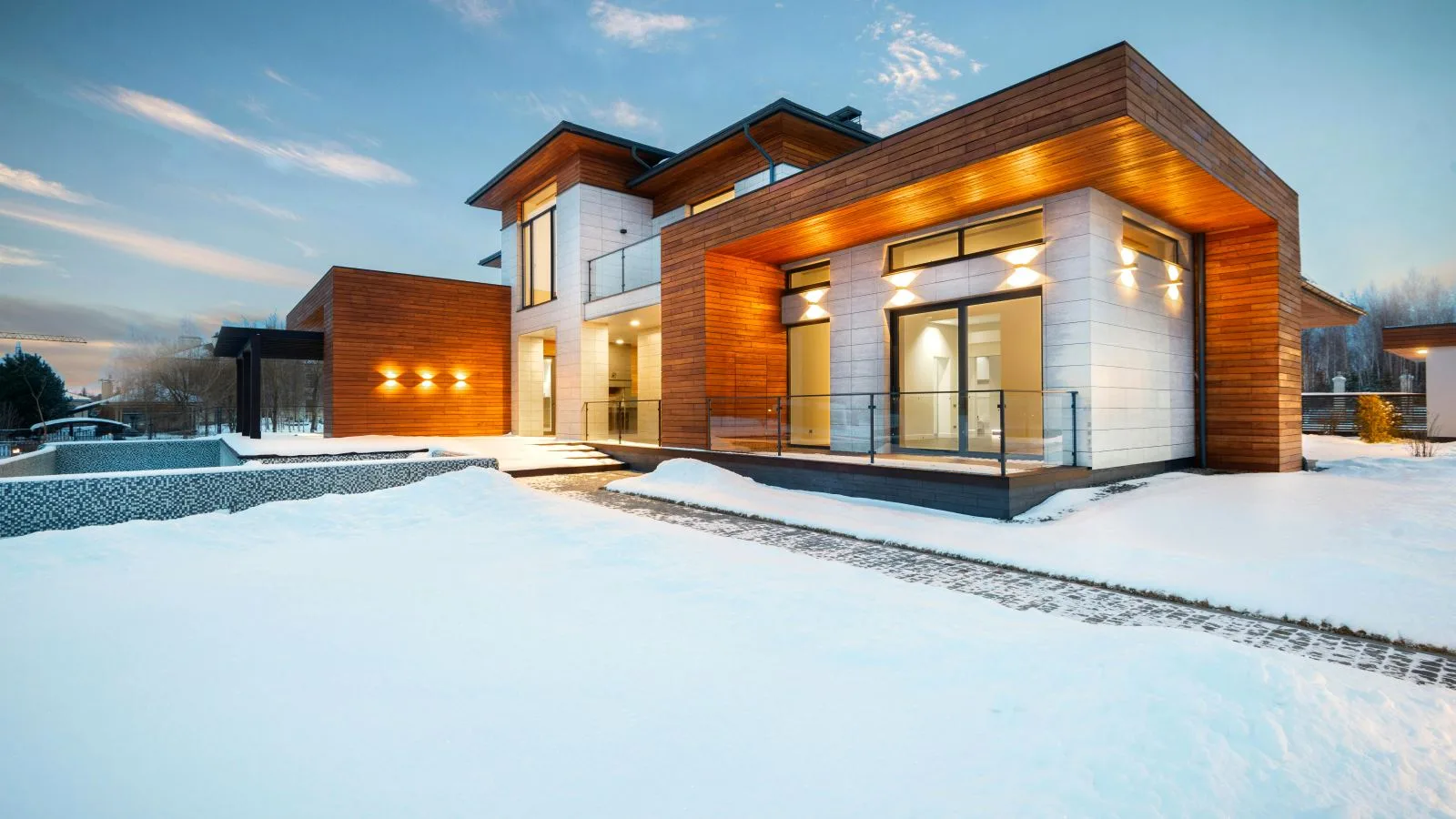
Buying in Sherbrooke, Gaspé, Saguenay or Rouyn-Noranda does not change the federal down payment rules. What changes is everything around the property: its appraisal, its type and the lender willing to finance it.
Is the down payment different outside the big cities?
No. The CMHC rule applies nationwide: 5% for a price of $500,000 or less, then 5% on the first $500,000 and 10% on the rest up to $1.5 million, and 20% beyond. Since purchase prices are often lower in the regions, the amount to save is lower too, which can make a first purchase reachable sooner.
Formula: minimum = 5% × price (if price ≤ $500,000). The table applies it to hypothetical prices, with closing costs estimated by CMHC at 1.5% to 4% of the price, using rules consulted on October 13, 2026.
Cash needed by price (examples, not market prices)
| Purchase price | Minimum down payment (5%) | Closing costs (1.5% to 4%) | Total cash |
|---|---|---|---|
| $200,000 | $10,000 | $3,000 to $8,000 | $13,000 to $18,000 |
| $300,000 | $15,000 | $4,500 to $12,000 | $19,500 to $27,000 |
| $400,000 | $20,000 | $6,000 to $16,000 | $26,000 to $36,000 |
| $500,000 | $25,000 | $7,500 to $20,000 | $32,500 to $45,000 |
Why can the appraisal be a problem in the regions?
The lender finances based on the value the appraiser retains, not only on the price you pay. In a market with fewer recent comparable sales, the appraiser has fewer reference points, and the appraisal can come in below the price. When that happens, the gap comes out of your pocket as extra down payment. Our article on appraisals below the purchase price explains the options.
- Keep a financing and appraisal condition in your offer to purchase.
- Ask your broker how the lender treats distant comparable sales.
- Keep a cushion in your down payment for an appraisal gap.
Which property types complicate financing?
In the regions you meet more often properties with large lots, a well and septic system, wood or oil heating, a private road or outbuildings. Each lender has its own criteria: some finance without difficulty, others decline or ask for more down payment depending on the case. What matters in the file is that the property is livable year-round, insurable and compliant.
Items a lender may look at
| Item | Why it matters | What to prepare |
|---|---|---|
| Well and septic system | Compliance and reliability of supply | Inspection report, water test if required |
| Main heating source | Insurability and running cost | Proof of condition and insurance |
| Large lot or mixed use | Share of the price tied to the house | Appraisal, zoning |
| Access road | Year-round access and insurability | Title and easements, checked with the notary |
| Multiple units | Different rules than 1 to 2 units | Leases, rental income |
Lenders and mortgage insurers add their own conditions depending on the type of property. CMHC notes, for example, that a non-traditional down payment source is limited to 1 or 2 unit properties. An unusual property can therefore change the options open to you. Ask your broker early about how the lender sees the property type, since a surprise at the appraisal stage costs time and sometimes a deposit. Ask your broker to validate the property before you commit to an offer.
Are the lenders the same outside the big cities?
A local bank or caisse may know the market and agree to finance properties others turn down. Conversely, some national lenders limit the areas or property types they accept. Comparing several lenders has concrete value here: a refusal from one does not mean a refusal from all. A broker compares several lenders to find the one whose criteria fit your property.
As for income, seasonal work or work tied to a local industry (mining, forestry, tourism) is documented like any other: tax returns, notices of assessment, history. The lender looks at stability rather than region. Read our self-employed article if your income varies.
What about a cottage or second home?
Many buyers in the Eastern Townships, Gaspésie or Saguenay aim for a vacation property. Requirements are often stricter for a second home: higher down payment, year-round access, heating, water. Read our cottage purchase article before signing an offer.
Frequently asked questions
Do you need a bigger down payment for a rural property?
The federal rule does not change, but some lenders may ask for more depending on the property type or location. Validate before making an offer.
Does a bank refusal in the regions mean the file is bad?
Not necessarily. Criteria vary by lender and property type. Another lender may accept the same file.
Where can I find real prices for my region?
From the APCIQ and local real estate boards, which publish market statistics. Do not rely on an average price without a date or source.
Do the FHSA and HBP apply in the regions?
Yes, they are federal programs valid anywhere in Canada. Confirm your contribution room and conditions with the CRA.
Can you buy land to build on?
Yes, but financing land follows different rules than a livable home. See our article on financing a land purchase.
Sources
- CMHC, general requirements for mortgage loan insurance · accessed 2026-10-13
- Financial Consumer Agency of Canada, how much you need for a down payment · accessed 2026-10-13